

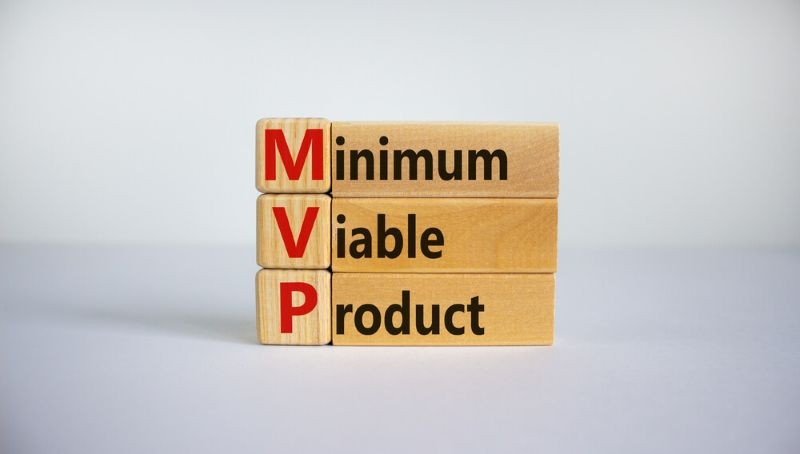
Launching a business usually starts with an idea, but in practice, turning the idea into a product is a lot more difficult than most entrepreneurs realize. Startups frequently fail because they invest time and resources into building products without fully knowing what their customers want. Building an MVP is perhaps the most intelligent thing a startup can do in order to minimize risk, accelerate learning, and grow with confidence.
An MVP is the version of a new product that allows a team to collect the maximum amount of validated learning about customers with the least effort. Rather than launching an entire product with every single feature desired, a startup instead creates only the minimum set of features to solve a customer problem and get to market. This helps a business test its product ideas against actual customers in the market without spending large amounts of money early in its journey.
A real feedback loop from users enables startups to avoid investing resources into developing features that are not highly valued by their customers.
Learn More: Common Startup Mistakes to Avoid to Gain Long-Term Success
Business environments change very quickly, with customers demanding instant solutions and expecting high quality throughout. If a startup spends too long creating the perfect product, the market could quickly move away from their offer, or competitors could emerge and beat them to market. MVP enables startups to launch their product quickly, yet at the same time delivers value to the end user.
Startups that develop MVPs quickly also begin to learn from users immediately. Customer feedback from early adopters of the MVP typically proves to be invaluable, as some desired features are identified as unnecessary after product testing. Many otherwise invisible customer needs also become apparent upon initial release.
The lean startup methodology is about creating products incrementally instead of committing a large sum to an idea upfront. Products are released and then iteratively improved based on the way they are used by customers. MVPs are essential for lean startups as they allow a learning experience from the user.
Lean also encourages adaptability when markets shift. In many cases, entrepreneurs realize their initial product idea is not, in fact, a problem for the target consumer. The lean method ensures businesses only lose a minimal amount of money through experimentation rather than making a disastrous mistake.
Most startups fail because the problem the product seeks to solve is not, in fact, a real problem for customers. A clear product validation strategy allows founders to ascertain the real demand for their solution prior to investing capital in creating a final product. Without customer feedback, there is no way of verifying a product's true potential beyond a prediction.
The product validation strategy is also designed to pinpoint exactly which customer segment will be most receptive to the product. By learning through the minimum viable product, startups are able to discern who truly benefits most and what product features they value most highly. This information is critical in planning future marketing and feature roll-outs.
Developing a complex, full-featured product is often prohibitively expensive for startups with limited resources. This can create significant financial risk for small companies. Building an MVP minimizes the cost by allowing founders to begin testing with only the most basic features in their product.
The rapid iteration cycle used to build MVP fast reduces many development costs and time, as the development is concentrated into building only the most necessary features. An MVP startup product development cycle ensures less capital is tied up in features that will likely not be valuable to the target consumer.
A major benefit of an MVP for startups is that it facilitates immediate understanding of the customer base. It allows entrepreneurs to receive candid feedback about what works and what does not, how usability, design, and cost can be improved, and the general customer product experience.
Using an MVP is also an excellent way to start building customer relationships, as businesses that develop the products their users truly desire build immediate rapport with them. The trust this cultivates helps promote a more positive customer experience and can even lead to higher long-term customer retention.
The market environment continues to change in relation to consumer preferences and advancing technology, so startups have to remain flexible to stay in business. An MVP is used to ensure businesses maintain flexibility when it comes to product development and will more easily adjust when these situations change. Startups do not have to invest a fortune in a development route only to find out that it is not viable, but can pivot when need be with little risk.
The adaptability of an MVP also lends itself to trying out new features, pricing structures, and the delivery of service. If a certain approach proves to be fruitless, then it can be done away with easily with little loss, compared to sticking with a project that fails.
The lean startup methodology goes beyond the early stage of a product's life and offers advantages that carry through long-term growth. Ideas are tested early on, and insights into customer behavior are gained from this testing and validation, enabling better future decisions to be made about a product and its related business.
This also prevents startups from experiencing excessive growth before having truly validated the potential for their business in the market. It is important for businesses to secure product-market fit prior to overspending and overgrowing.
Read Next: Micro SaaS Business Guide to Build Profitable Startup Today
A minimum viable product is far more than simply the early version of a product; it is a strategy and an integral part of the modern entrepreneur's tool kit, enabling businesses to test concepts with real customers, iterate upon their product, and be guided by genuine market demand thereby mitigating risk, reducing expenditure, gaining valuable insights, and improving product and business prospects over the long term.
The greatest advantage of an MVP is that it permits startups to experiment with an idea rapidly and safely. A startup can release a rudimentary version of its product to gather feedback from its clients, thereby enabling the iteration process, and also saving significant resources for features that may never even be useful for clients.
With an MVP strategy, a startup's product development can be quicker and more efficient. Startups are supposed to be focused on providing the least necessary product features first so that they are able to launch faster, learn from client feedback, and then accordingly design better products instead of following predictions at the beginning of the product life-cycle.
Lean startup methodology is vital since it promotes businesses to continuously test, learn, and iterate. Startups can rely on client input for making product decisions to reduce the risk of creating a product with very little demand.
Startups should develop an MVP fast to gather data on a new product or idea from its clients and test demand for the same in real market time, rather than relying on predictions made beforehand and spending too many resources on the new product development without knowing the exact response. A faster launch provides an edge over the competition by understanding the needs of customers.
This content was created by AI